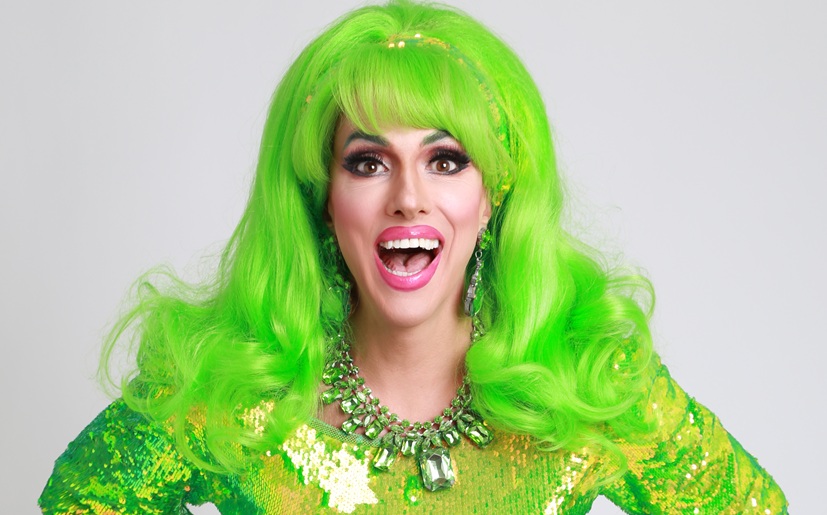
A true icon and pioneer of nightlife who is both OG and ever evolving, Hedda Lettuce is an essential item for everyone’s drag diet! Having made several crowd pleasing TV appearances (including a show of her own back in the day) and creating several sensational live residencies, Hedda’s returning this month to a gayborhood that loves her… but this time it’s at a different venue!
Thotyssey: Hedda, hello! So it looks like you recently wrapped up your seasonal residence in Puerto Vallarta, Coco Cabaret! How did you enjoy the show this time around?
Hedda Lettuce: Yes! I just finished my season at Puerto Vallarta’s newest cabaret, Coco’s. Of all the venues I’ve performed in throughout PV, Coco’s has far and away the best sound and lighting–which makes my job an absolute joy. I’m already counting down to next season!
Puerto Vallarta has been a primary home base of yours for some time now. You must have seen the city evolve as a gay hub in so many ways since you got there.
When I arrived during the 2016/17 season, the place was already very gay. Today, it’s even gayer. Everywhere I turn, a new gay bar or massage place is opening up. These establishments are creeping deeper into the town—soon enough, the PV airport will be selling poppers, lube, and PrEP.
How’s your Spanish?
It’s just good enough to order a taco… and accidentally propose marriage to the local trade.
I would think that the downside of being an established, successful solo performer is the chaos and solitude of the nomadic lifestyle. Is that your experience at all?
I am not nomadic by nature; I gravitate toward places where I can settle for month-long residencies, and truly get to know my surroundings. The days of flying from city to city are long gone—I prefer to nest. That’s why Puerto Vallarta, NYC, and Fire Island are perfect for me. My philosophy is simple: If you want to see me, you come to me.
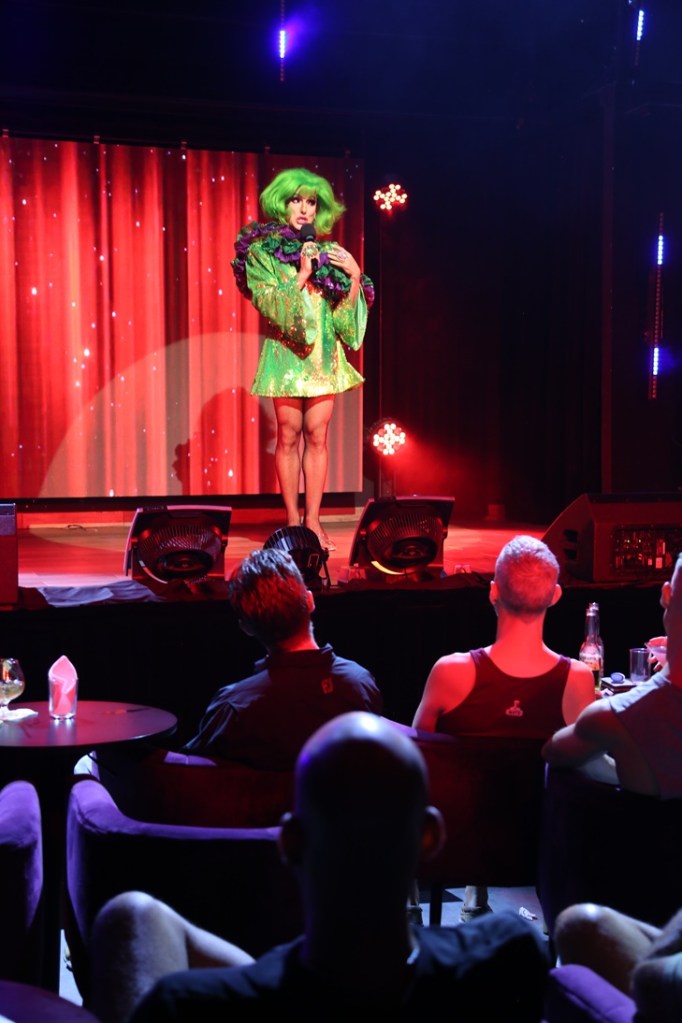
You are a native New Yorker, and that’s where you started your drag career. What was drag and the queer nightlife scene like when Hedda was created, generally speaking?
The NYC drag scene in the 90s was breathtakingly beautiful. So many talented queens came into their own organically, without the pressure of social media looming over them. There was room for imperfections, for mistakes—and because of that, you grew as an artist. God, I was lucky to be part of it.
In your featured segment of 2010’s Queens of Drag: NYC (a potential pilot for a drag reality series that you and several other iconic queens would’ve been a part of, that was criminally not picked up) you said that you weren’t really fond of most other queens! Is that still the case?
I tend to be a loner, and don’t involve myself with most queens. When I see my contemporaries, we’re polite to one another and simply move on—except for one queen, whom I loathe (though I won’t name her). Being an introvert in an extrovert’s job, hanging out with a gaggle of drag queens can be challenging. Their endless clucking—about this, that, and which dick they sucked the night before—exhausts me. I’d rather be walking my dogs, or watching paint dry on a wall.
Your cabaret-style drag shows feature tons of jokes and bits in addition to live vocals. How much of that comedy is written, and how much of it is improvised?
I took a learning disability—ADHD—and turned it into a career. I’ve always struggled to focus and remember details, and as I age it only gets worse. My stage act combines singing with extensive verbal play with the audience. It’s in the improvisational moments where my mind shines brightest—keeping me present, which works perfectly with my ADHD. That’s not to say there aren’t scripted bits or recurring jokes, but even those were born from spontaneous moments.
What do you think about people’s changing taste and tolerance for comedy? Did you have to change your routine on stage or your social media content over time, or do you always stick to your gut about what’s funny and what works?
Everything changes, and you have to go with the flow. As an instinctual performer, I’ve mastered pushing my comedy right to the edge. Fortunately, my character always allowed more comedic freedom than most performers get… a privilege I never took for granted.
Drag is likely a very different business today than when you and your trailblazing sisters were ruling the scene: it’s all very lip synch driven, lots of flipping and dipping, and looks are either highly evolved couture fashion with intricate makeup or the opposite–fishnets and no body padding. There’s also a massive oversaturation of it in the bars, especially in NYC. Obviously RuPaul’s Drag Race is a big contributor to many of these changes. What are your thoughts on how drag has evolved over time? Is it all good, bad, or both?
In a world that keeps trying to push us back into the shadows, drag visibility – whether on TV or film – remains vitally important. Right now, that visibility comes from RuPaul’s Drag Race. In years to come, it’ll be something else. Drag will always evolve, adapting and rising to meet each new era. Because the more queer visibility we have, the better our world becomes.
You’ve had so many career highlights over the years, including very noteworthy onscreen work! I gotta ask you about a few of those moments. First off, 1995’s To Wong Foo Thanks for Everything, Julie Newmar featuring a who’s who of prominent New York queens in both the opening and closing pageant scenes filmed in Webster Hall and Old Westbury Gardens respectively. You were one of those many amazing queens to appear in that film!
I’m still pissed about the casting process in To Wong Foo. Want to know the truth? They put the pretty girls in the final scene (where I appeared) and stuck the less attractive of the queens in that Webster Hall sequence. If I’d just had a missing tooth or some scars, I might’ve made it into the opening club scene and gotten real screen time. But hey, I did get to meet Julie Newmar, so that was pretty cool.
It must also be said that you were basically a multimedia trailblazer pre-social media, hosting a cable TV public access show that exposed the world to the surrealism, silliness and artistry of 90s drag! What were those days like… and did that experience teach you a lot about marketing, hosting, editing, etc?
My cable show, The Hedda Lettuce Show, was a 1990s dream come true. As executive producer and writer, I worked alongside the most delicious cast of characters. The concept offered a behind-the-scenes look at a talk show hosted by a drag queen, giving us the perfect platform to lampoon current events before a live audience. Through satire and situational comedy, we captured the spirit of our times. Originally filmed at the East Village’s Crowbar, I’ll forever be grateful to club owner Bob Pontarelli for giving me this incredible opportunity.
A particularly wild ’97 episode of The People’s Court featured you as the defendant, with a shop owner suing you for damages to some property from her store that you used on The Hedda Lettuce Show. How much of what we saw in that courtroom on TV was a performance, and how much of it was a real legal issue?
It was a legitimate legal matter. Back then, The People’s Court producers would scour small claims cases, and if something intrigued them, they’d approach the claimants about appearing on the show. When they contacted me, I agreed… but only if I could appear in drag.
The case was concerning a lamp that the vendor had provided as a set piece [used in The Hedda Lettuce Show]. When it broke during filming, they became livid and sued me for damages. I brought my sidekick Bubbles as my star witness, and we completely trounced the plaintiffs–who, if I remember correctly, represented a store called It’s a Mod Mod World.
What gloriously gay television! The judge was none other than New York City’s former closeted mayor Ed Koch, who was absolutely divine, consistently addressing me as “Miss Lettuce.” The entire proceeding was unscripted and deliciously real.
And you had an interesting cameo in a ’99 second season episode of Sex & The City where your drag character turns out to have an interesting connection to one of the leads! What was it like working on that show, just as it was becoming really major appointment TV?
My Sex and the City episode was a major career moment. I played Samantha’s ex-boyfriend, a hockey player she unexpectedly runs into at a drag bingo parlor, where I now perform as a fabulous drag queen named Samantha (yes, a direct homage to her character). The encounter leaves Samantha stunned, though she tries to remain polite while the other girls gape in shock.
Of all the ladies, Kim Cattrall [who played Samantha] was the warmest toward me–we even shared a lovely chat at the craft services table. Sarah Jessica Parker seemed utterly indifferent to my existence, her face perpetually buried in the script between takes. Cynthia Nixon was perfectly pleasant, while Kristin Davis… well, let’s just say I felt her dagger eyes every time the cameras stopped rolling. And I absolutely loved every minute of it!
Your 2008 appearance on Project Runway is commonly thought of as a test run for RuPaul’s Drag Race, where you and a large squad of NYC drag stars were the models for the designer contestants in the show’s first ever drag fashion challenge. RuPaul, looking very different than she does today, was a drag judge! Did you have an inkling at the time that something big was going to come from that taping? Also, how did you like the outfit that was made for you, and were you allowed to keep it?
When I appeared on Project Runway, I had no idea how much attention it would bring. I unwittingly became the episode’s villain–my name even became shorthand for difficult clients in later episodes. (“That client was a real Hedda Lettuce!” they’d say.) My designer, Suede, was sweet but overly sensitive–though to be fair, the producers deliberately pitted us against each other. Still, I remained completely professional, strutting down that runway like I was wearing Valentino. As for the actual outfit he created? Let’s just say that heinous creation wasn’t exactly my taste!
And it must’ve been fun doing Ugly Betty in 2010.
Appearing on Ugly Betty was an absolute joy. I played myself, Hedda Lettuce, and had the incredible opportunity to work directly with Vanessa Williams–even performing alongside her in a nightclub scene. Vanessa was wonderfully kind; I’ll never forget her complimenting the sequined poncho I wore to set. I was beyond flattered!
When did you first become a Fire Island performer, and how do you explain the magic of that community to someone who’s never been?
I’ve been performing on Fire Island since the early 1990s. The atmosphere in Cherry Grove is utterly addictive–it’s kept me returning to various venues there for nearly thirty years. I love it so deeply that I’ve requested my ashes be sprinkled in the Meat Rack when I die.
If you’ve never been, it’s one of the most magical queer spaces in the world. No cars. No bikes. Just wooden walkways connecting tiny, whimsically named houses to a compact town with a handful of bars and restaurants. On paper it might not sound impressive, but once you arrive, you’ll never want to leave.
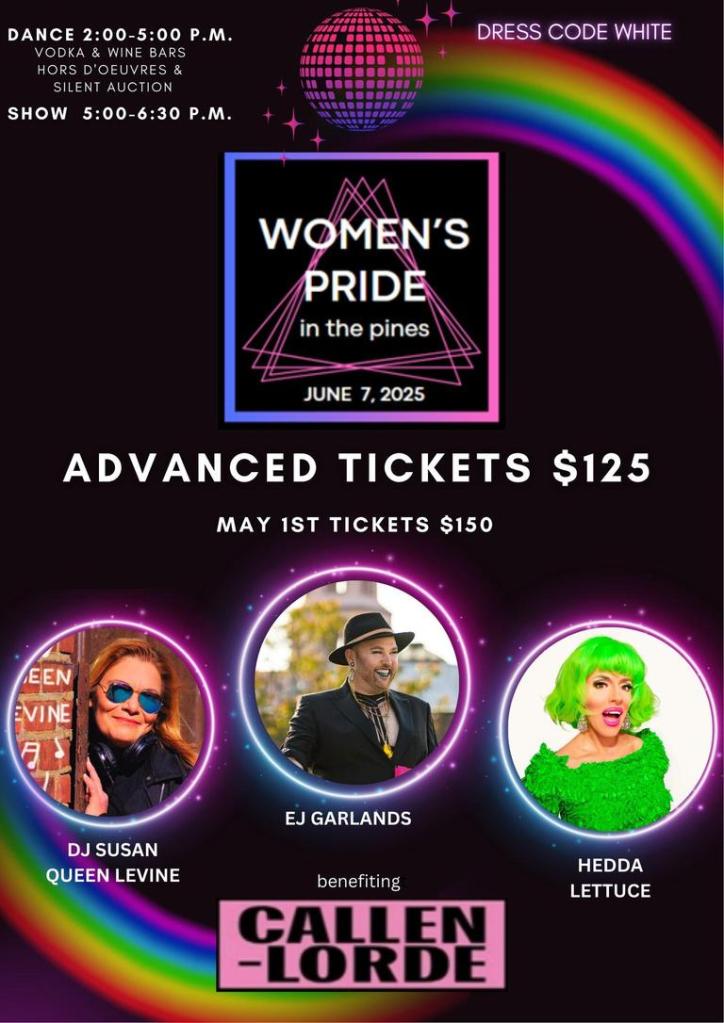
You are returning to the Island this month! First off, you’re a featured performer for “Women’s Pride at The Pines” at Whyte Hall on June 7th with singer EJ Garlands and DJ Susan Levine, benefiting Callen-Lorde!
Yes! I’m thrilled to be returning to Fire Island in June for “Women’s Pride in the Pines.” I’ll jump at any chance to raise money for Callen-Lorde–for God’s sake, that’s the medical facility I use, and they need every dollar they can get to keep me alive and fabulous! For the event, I’ll be performing a mix of songs and standup comedy.
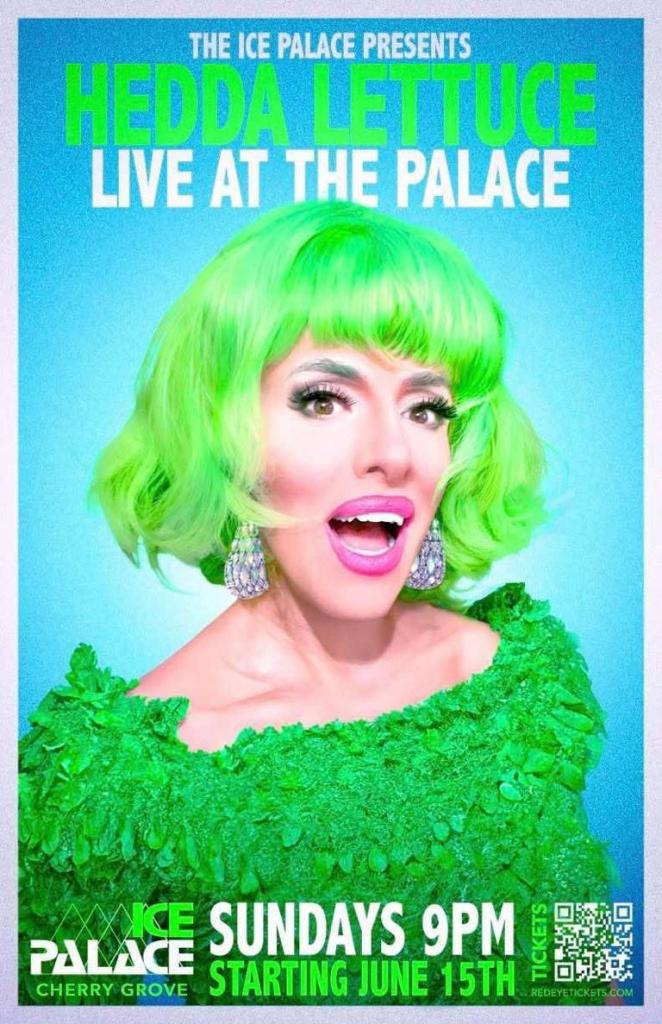
And starting June 15, you’ll be hosting a weekly Sunday show at The Ice Palace! I believe this will be the first time in quite a while that you’ve been part of that venue’s lineup, and now it’s under the new management of Daniel Nardicio and the Red Eye Guys!
I’m excited to be performing at the Ice Palace this season! Collaborating with accomplished promoters like Daniel and the Red Eye team guarantees this will be a spectacular night. It’s been over twenty years since I last had a regular show at the Palace, and I can’t wait to reclaim that legendary stage. This move to the Palace keeps my act fresh, and gives the boys something to gossip about… and let’s be honest, if they’re not talking about you, you’re not doing it right!
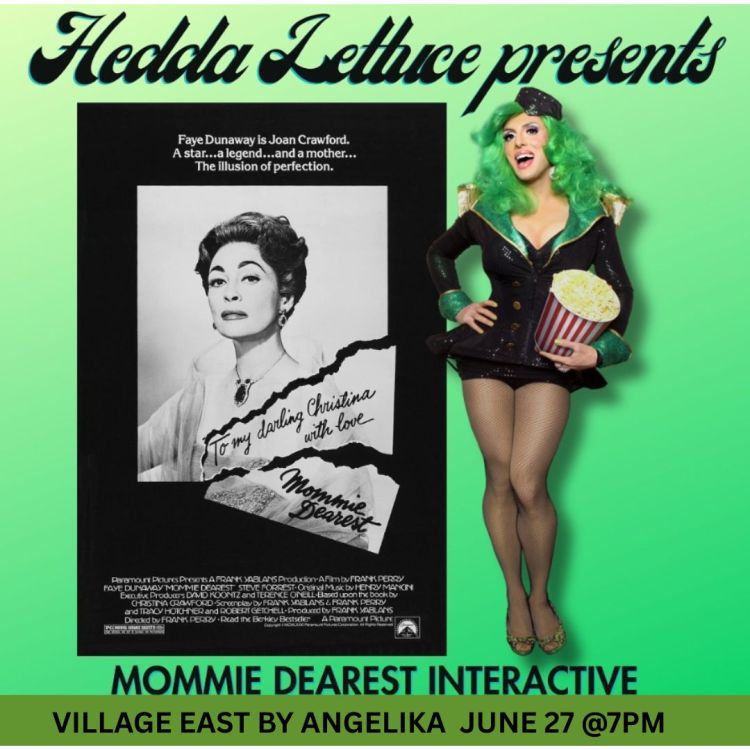
Let’s also mention the live events series you hosted over the years in which you screened camp classic films with live, colorful commentary at local movie theaters in NYC. Your take on Mommie Dearest is essential gay viewing! Are you you bringing it back soon?
For over 20 years, I’ve hosted my classic camp movie night in NYC. I will have the honor of presenting my crowning glory, “Mommie Dearest Interactive,” at Village East by Angelika during this year’s NYC Pride Week (June 27th). Mommie Dearest, being one of the greatest camp films of all time, reaches new heights of campiness when shown to a live audience. It becomes a religious experience as we shout all the infamous lines in perfect sync with the film.
This iconic movie has brought me tremendous success. I even appeared as a special feature in the 40th anniversary DVD re-release, providing comedic commentary over the film. Now that was a real feather in my cap!
Many great summer events for the children to eat up! Finally, what is your favorite type of lettuce?
Romaine.
Thanks Hedda, Happy Pride Month!
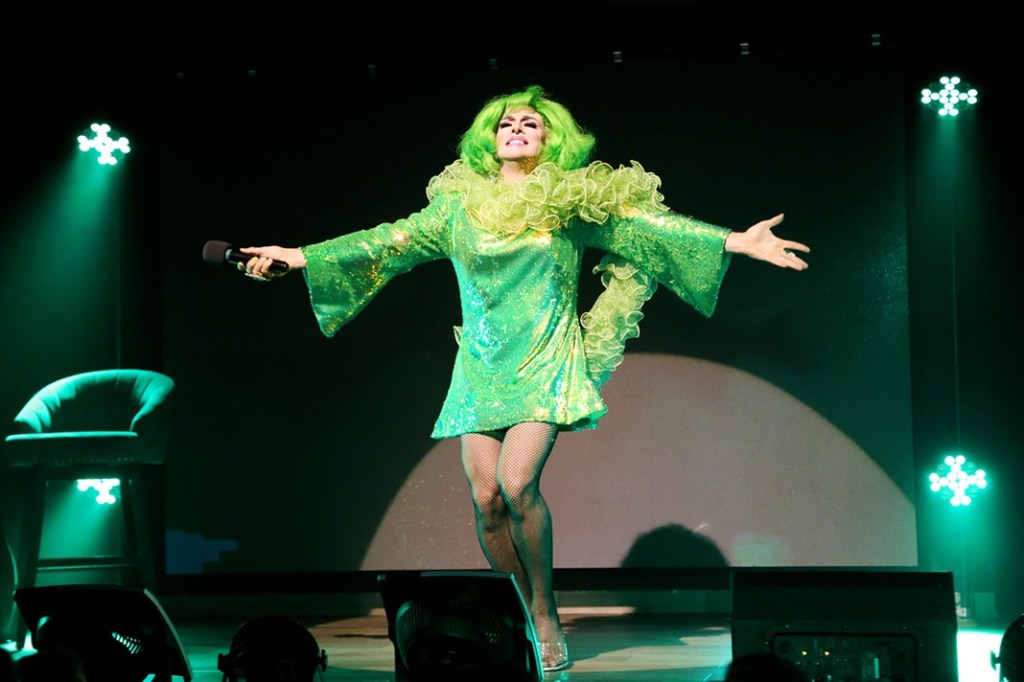
Check Thotyssey’s calendar for Hedda Lettuce’s upcoming area appearances, and follow her on Facebook, Instagram, TikTok and YouTube as well as her website.
 Thotyssey